
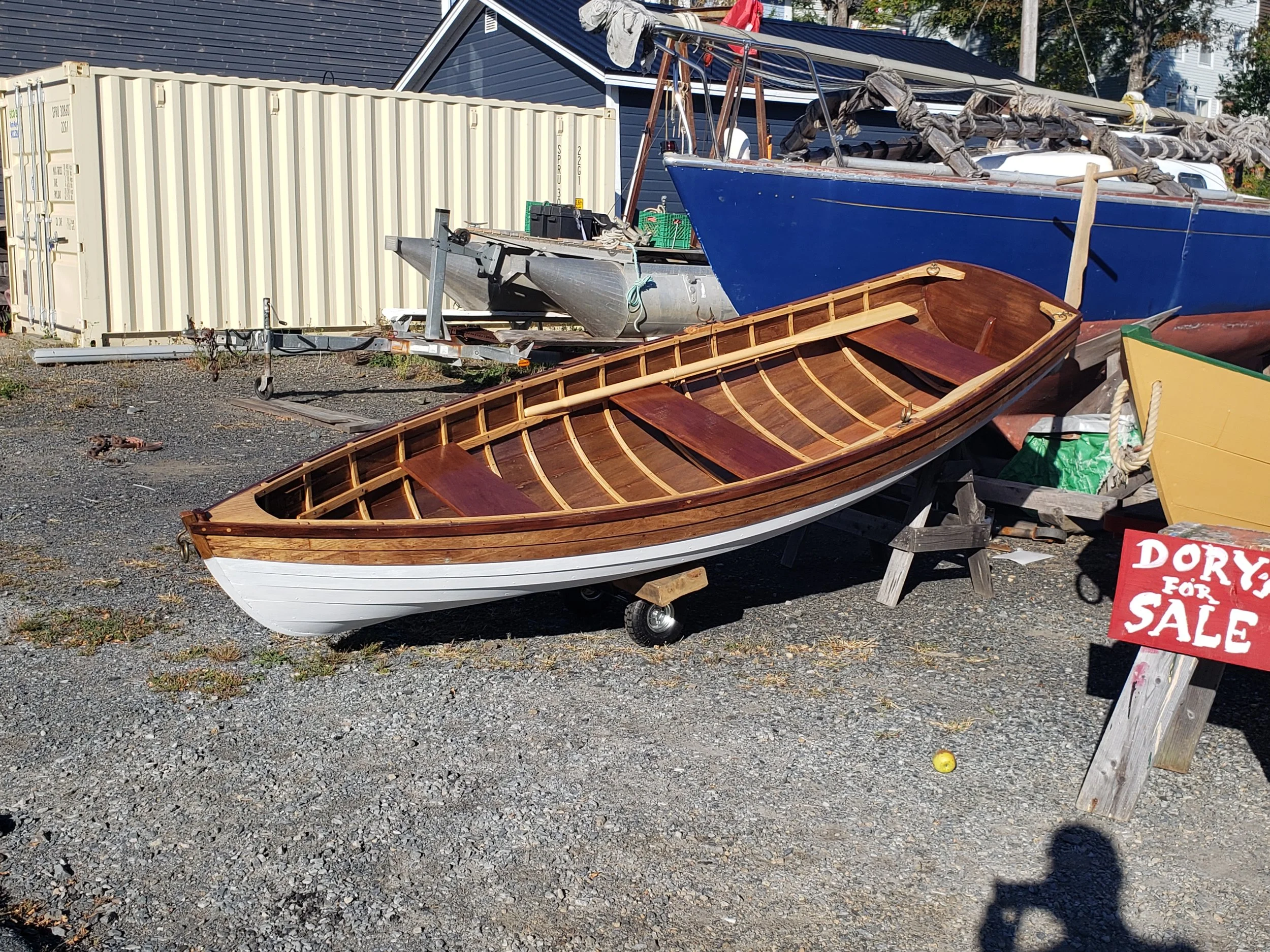
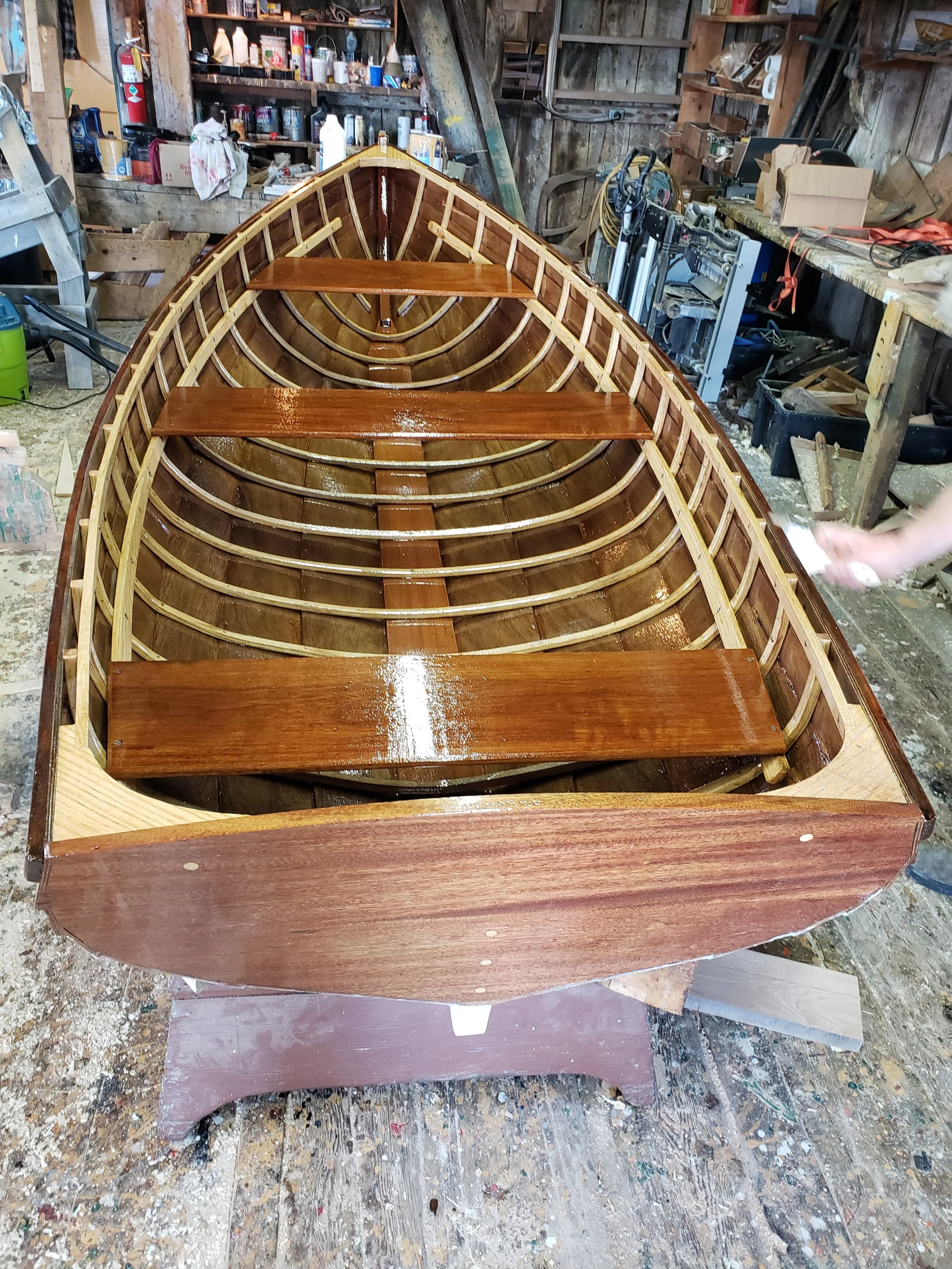
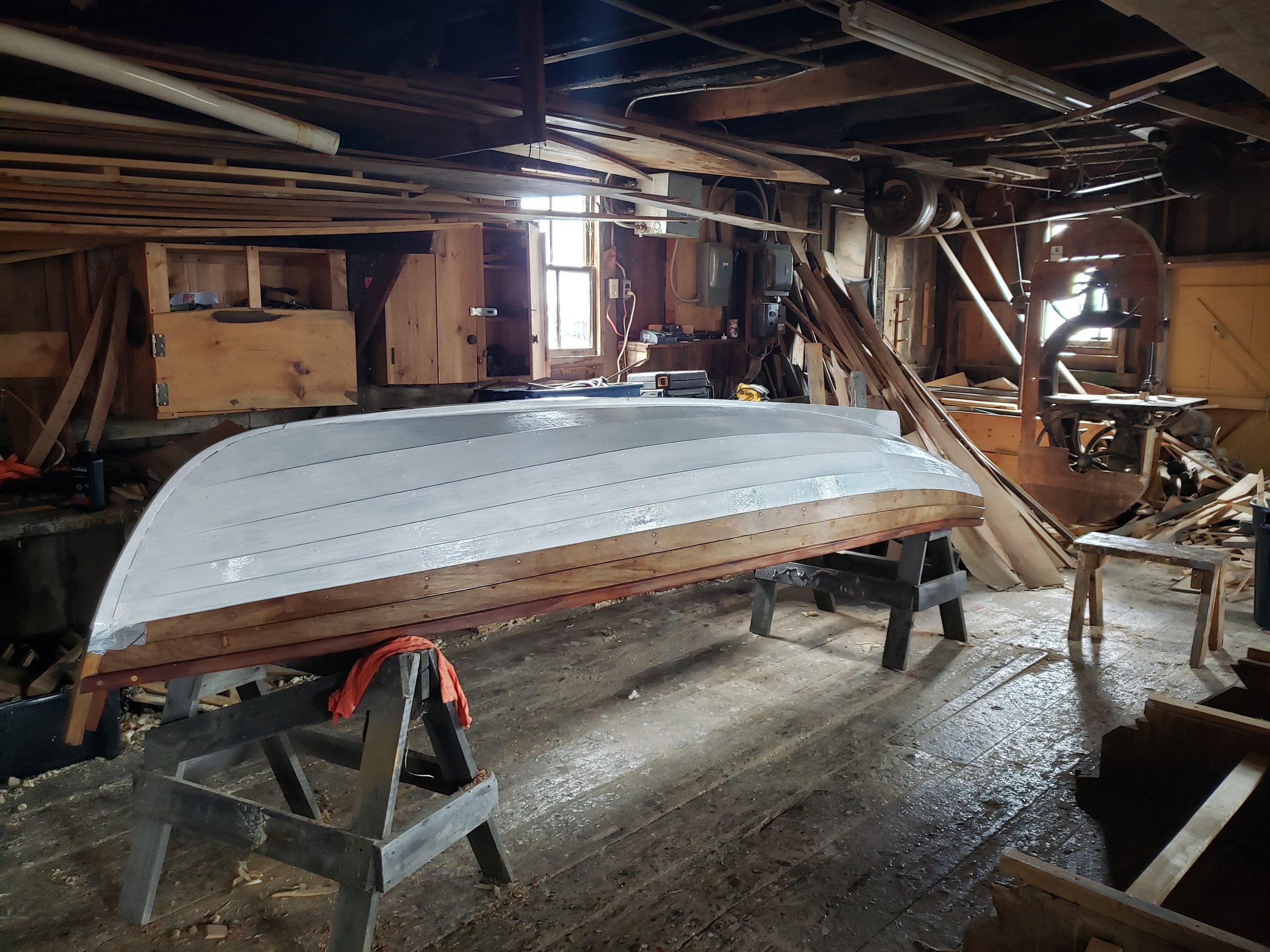
Brand new 10’ foot lapstrake copper fastened Whitehall rowboat for immediate sale!
Typical of small craft all over Europe what we call a “whitehall” was originally developed in New York Harbor in the early 1800s, used as a working harbor boat. Known for a fine entry, flared topsides, a broad stern (or sometimes a tombstone transom), and excellent rowing performance. Light, easy to row and seaworthy.
Lapstrake (clinker) construction means the hull planks overlap each other, with each strake lapping over the one below. This gives the hull longitudinal stiffness without heavy framing, keeping the boat light. It also produces that beautiful shadow-line along the hull.
Copper fastening is the traditional and correct choice for lapstrake work — typically copper rivets and roves (washers) through the plank laps, and copper nails into the frames. Copper is soft enough to rivet without splitting the wood, won’t corrode in fresh or salt water, and has good galvanic compatibility with most boatbuilding woods like cedar, mahogany, or oak.
Key building details to know:
Whitehall:
• Planking is in marine mahogany plywood for lightness and strength; frames in white oak.
• Lap seams are traditionally bedded in marine glue or a flexible sealant, not caulked
• Copper rivets are set with a bucking iron against the rove on the inside while peening the outside
• Garboard and hood ends of planks fasten into the stem and transom are the trickiest fits and hold all together.
Length - 12’
Weight - 250lbs
Oar Length - 6’ - 6.5’
Brand new 10’ foot lapstrake copper fastened Whitehall rowboat for immediate sale!
Typical of small craft all over Europe what we call a “whitehall” was originally developed in New York Harbor in the early 1800s, used as a working harbor boat. Known for a fine entry, flared topsides, a broad stern (or sometimes a tombstone transom), and excellent rowing performance. Light, easy to row and seaworthy.
Lapstrake (clinker) construction means the hull planks overlap each other, with each strake lapping over the one below. This gives the hull longitudinal stiffness without heavy framing, keeping the boat light. It also produces that beautiful shadow-line along the hull.
Copper fastening is the traditional and correct choice for lapstrake work — typically copper rivets and roves (washers) through the plank laps, and copper nails into the frames. Copper is soft enough to rivet without splitting the wood, won’t corrode in fresh or salt water, and has good galvanic compatibility with most boatbuilding woods like cedar, mahogany, or oak.
Key building details to know:
Whitehall:
• Planking is in marine mahogany plywood for lightness and strength; frames in white oak.
• Lap seams are traditionally bedded in marine glue or a flexible sealant, not caulked
• Copper rivets are set with a bucking iron against the rove on the inside while peening the outside
• Garboard and hood ends of planks fasten into the stem and transom are the trickiest fits and hold all together.
Length - 12’
Weight - 250lbs
Oar Length - 6’ - 6.5’