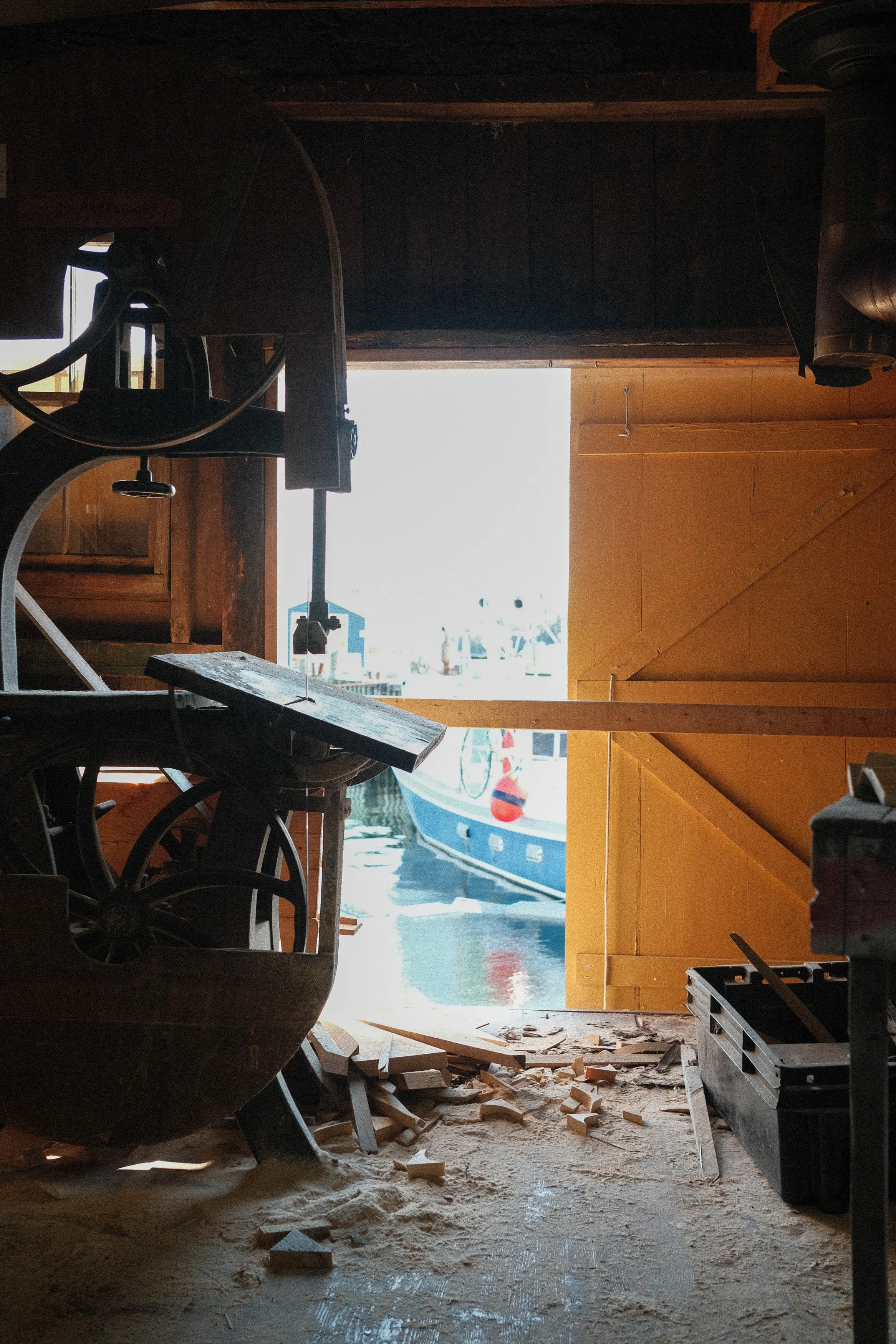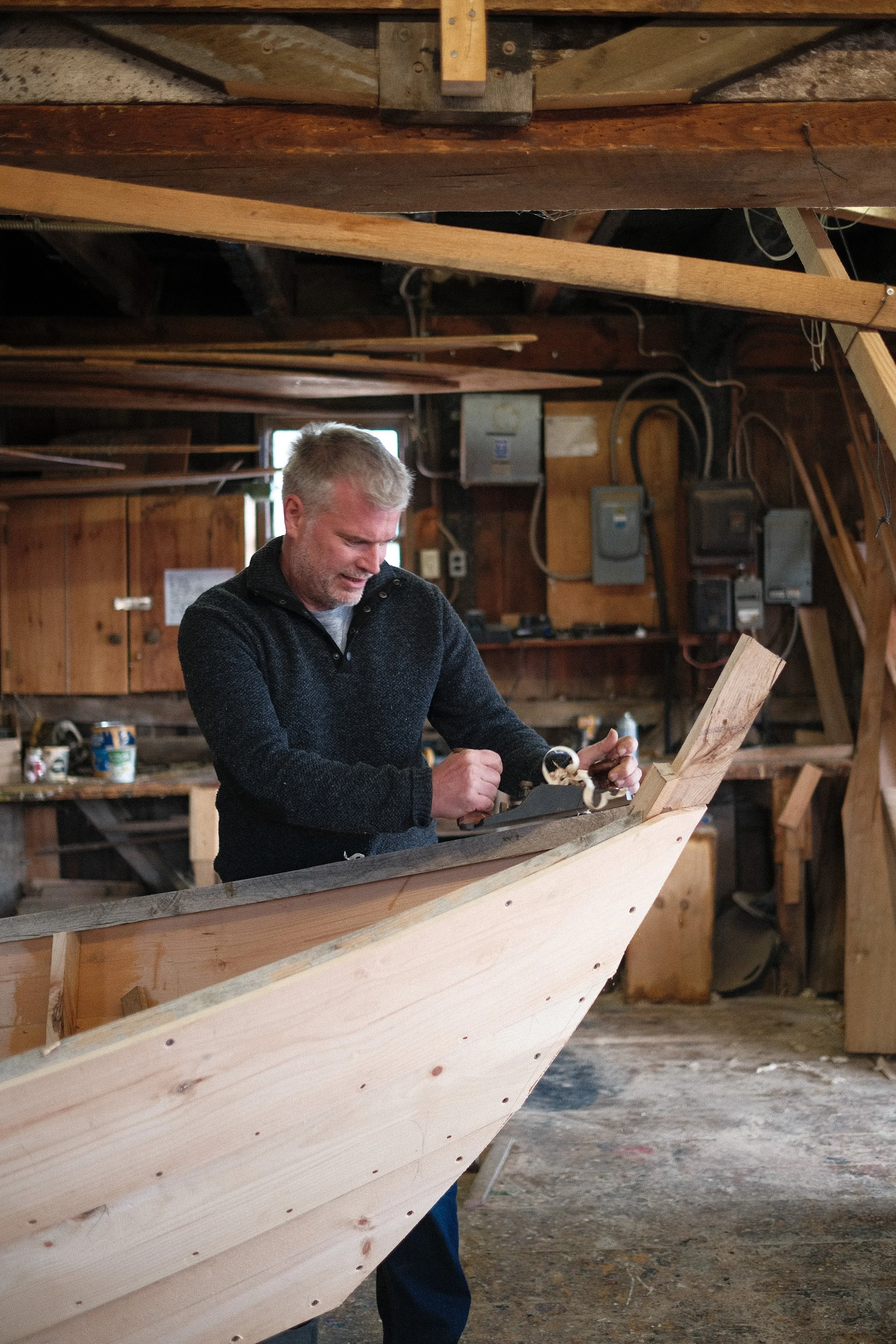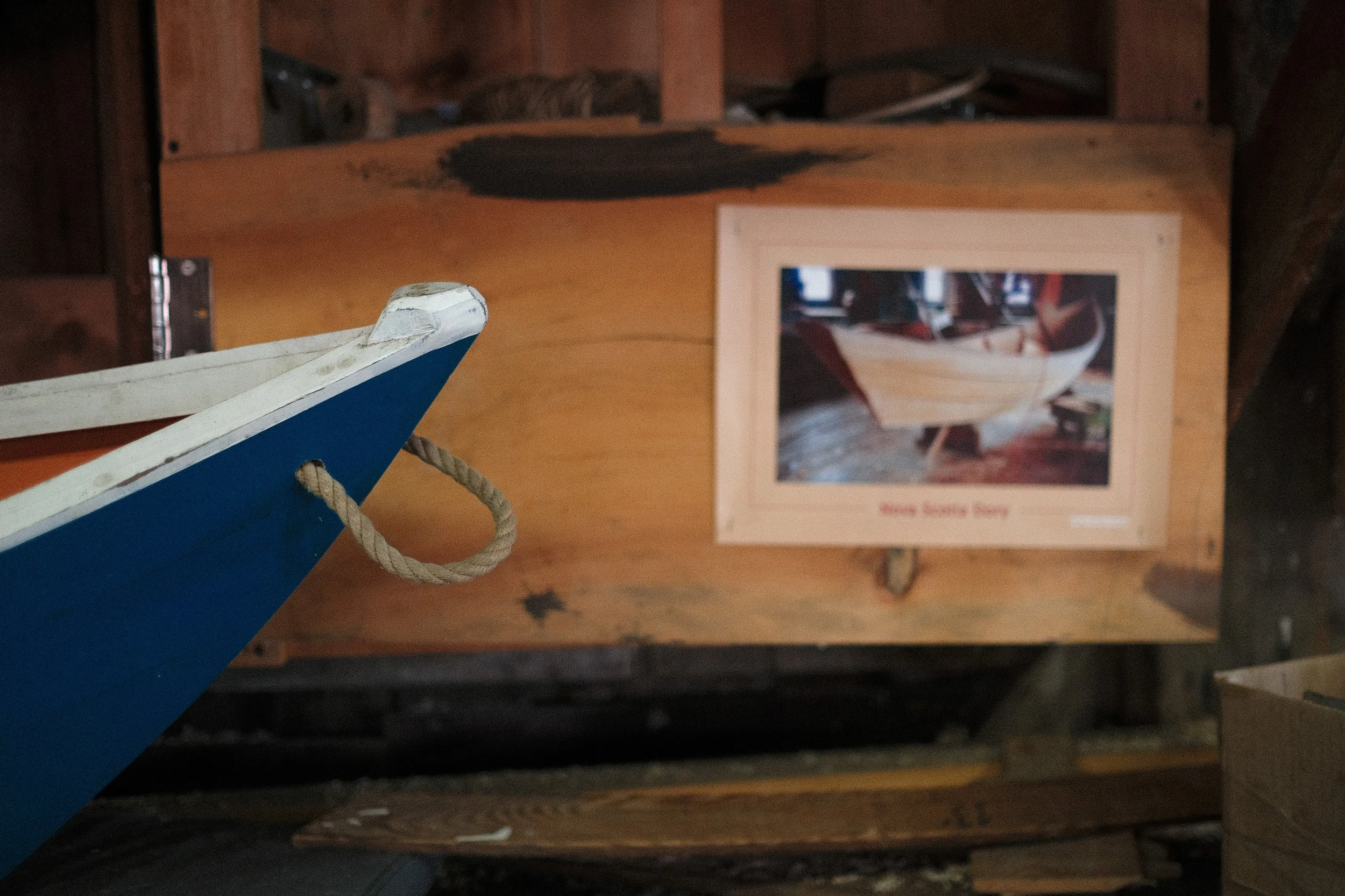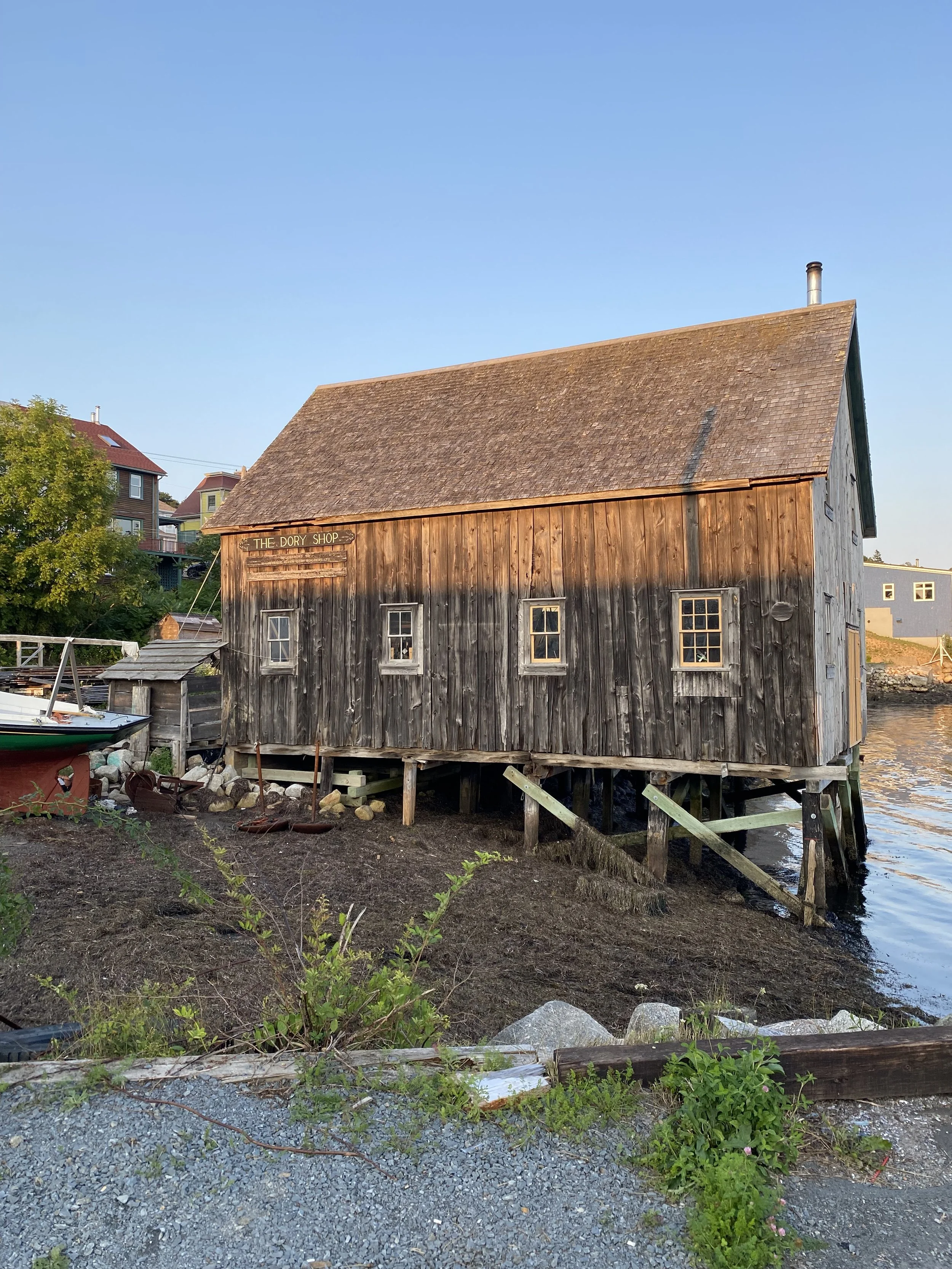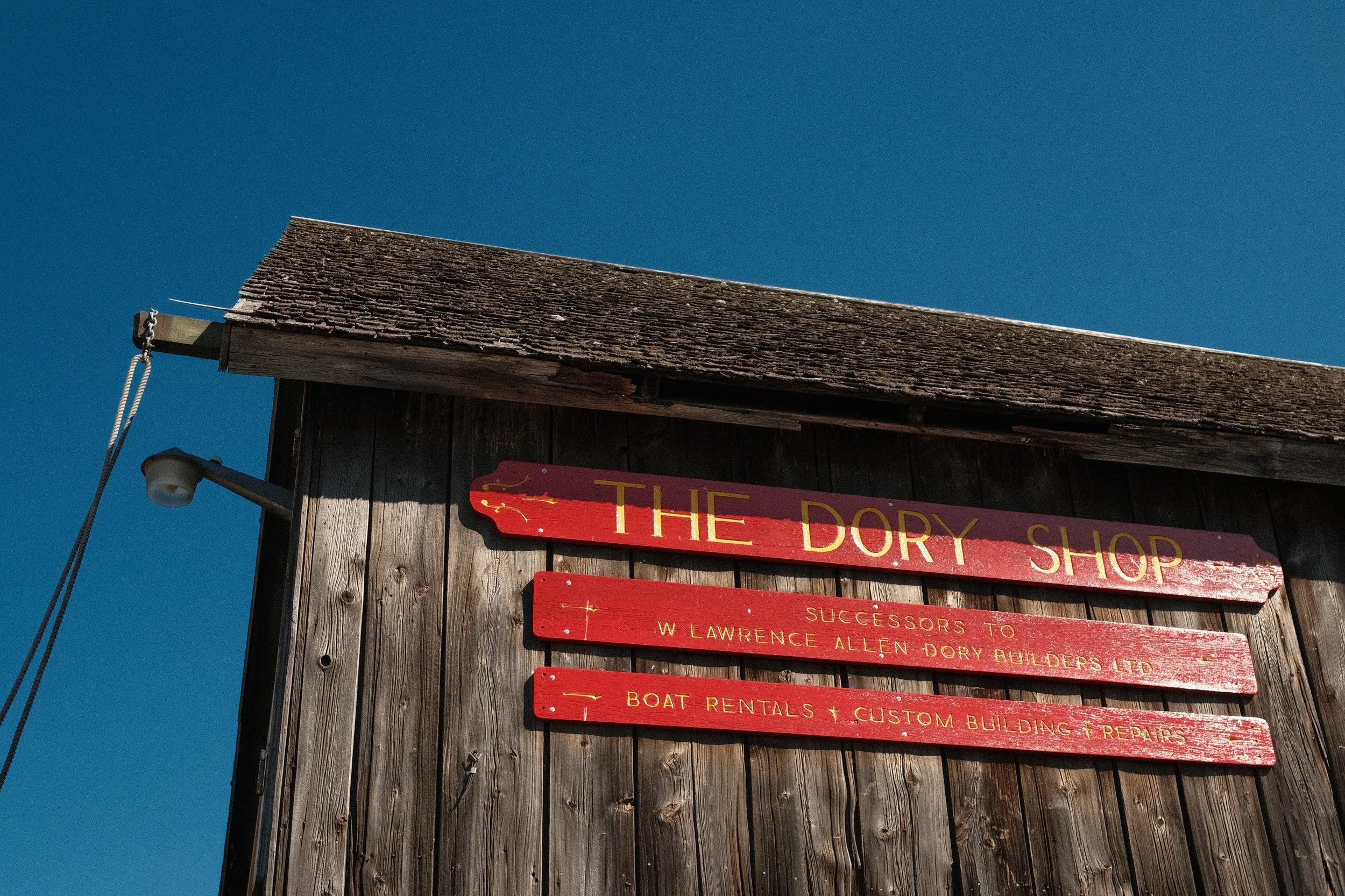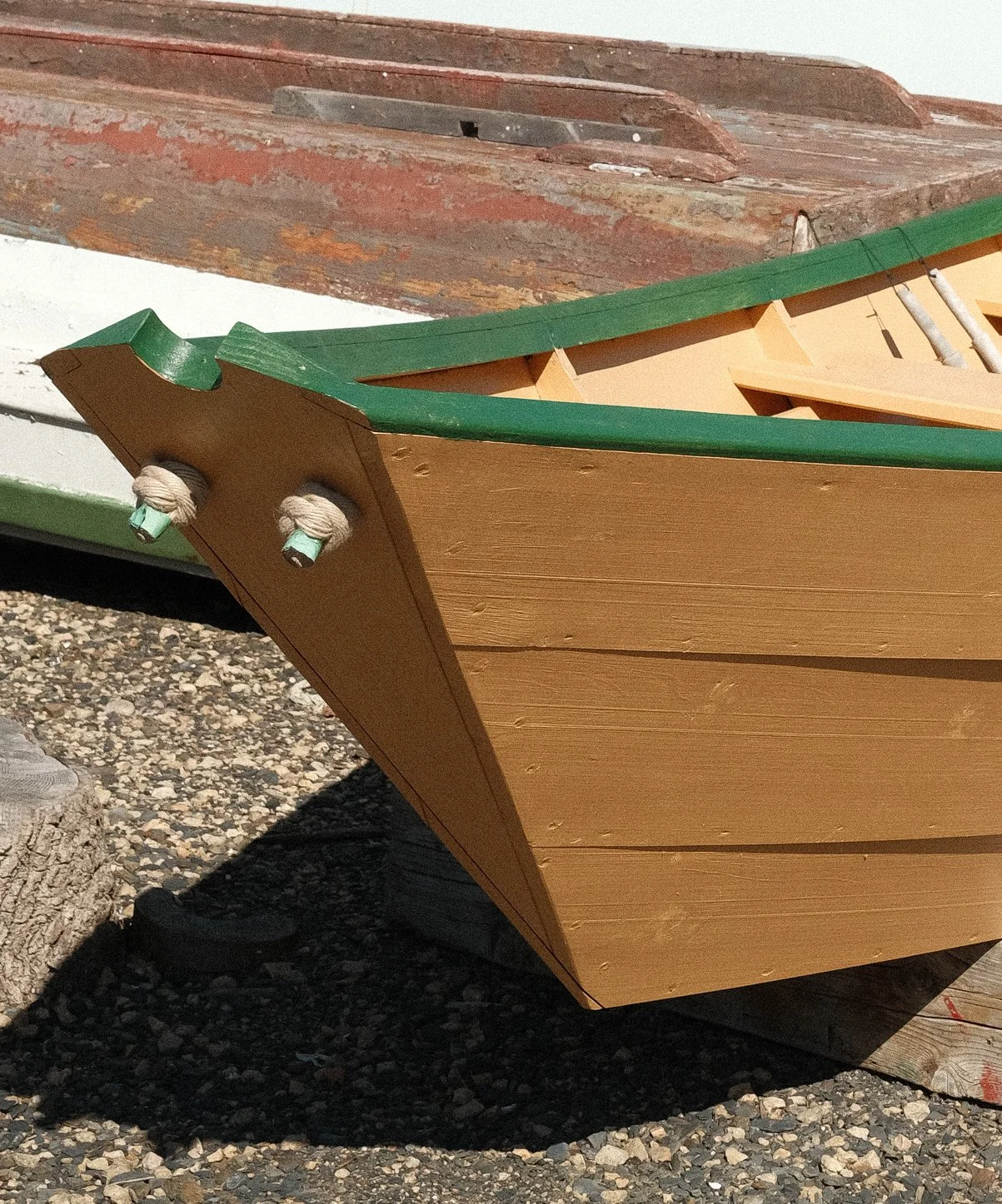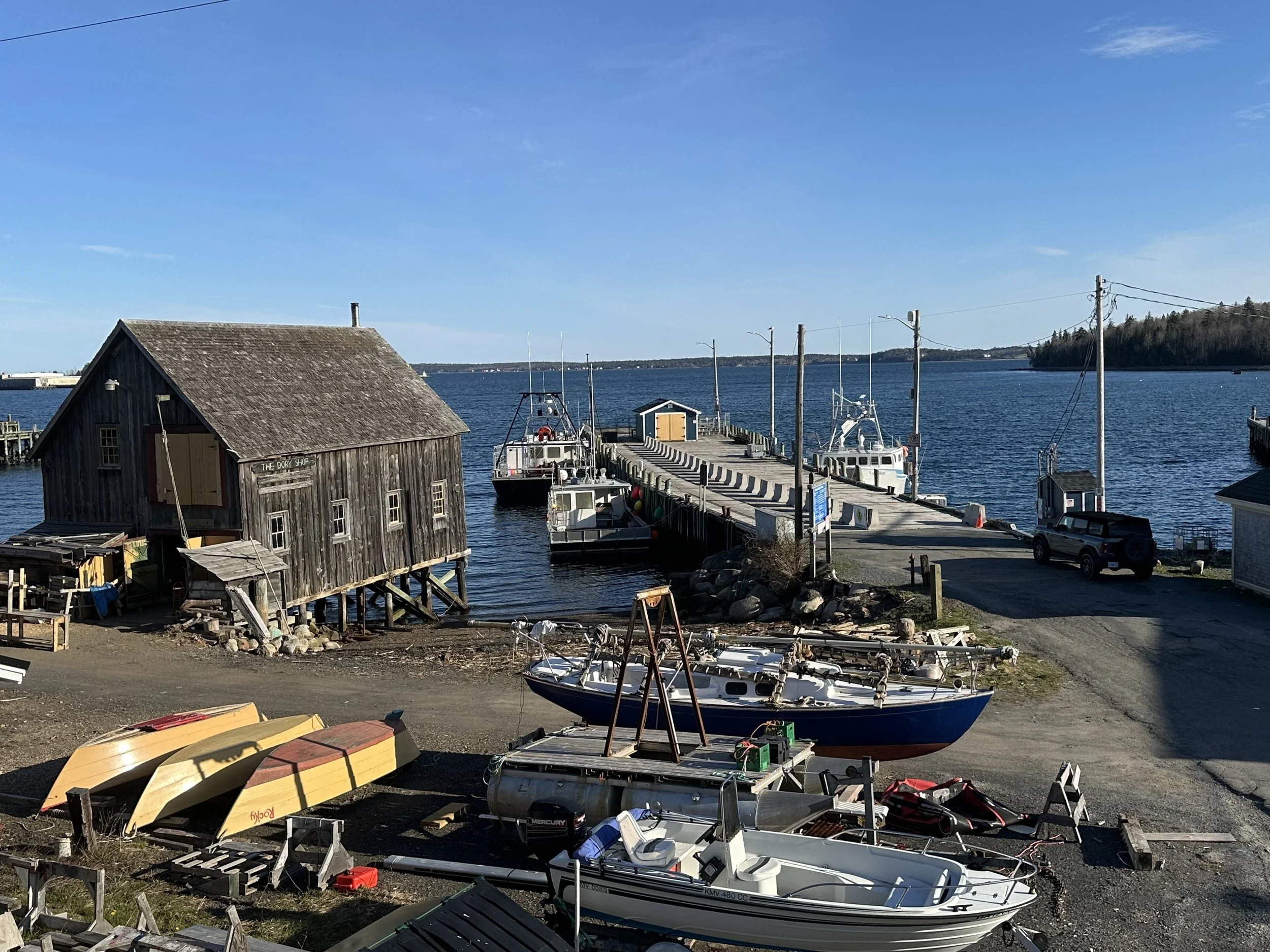
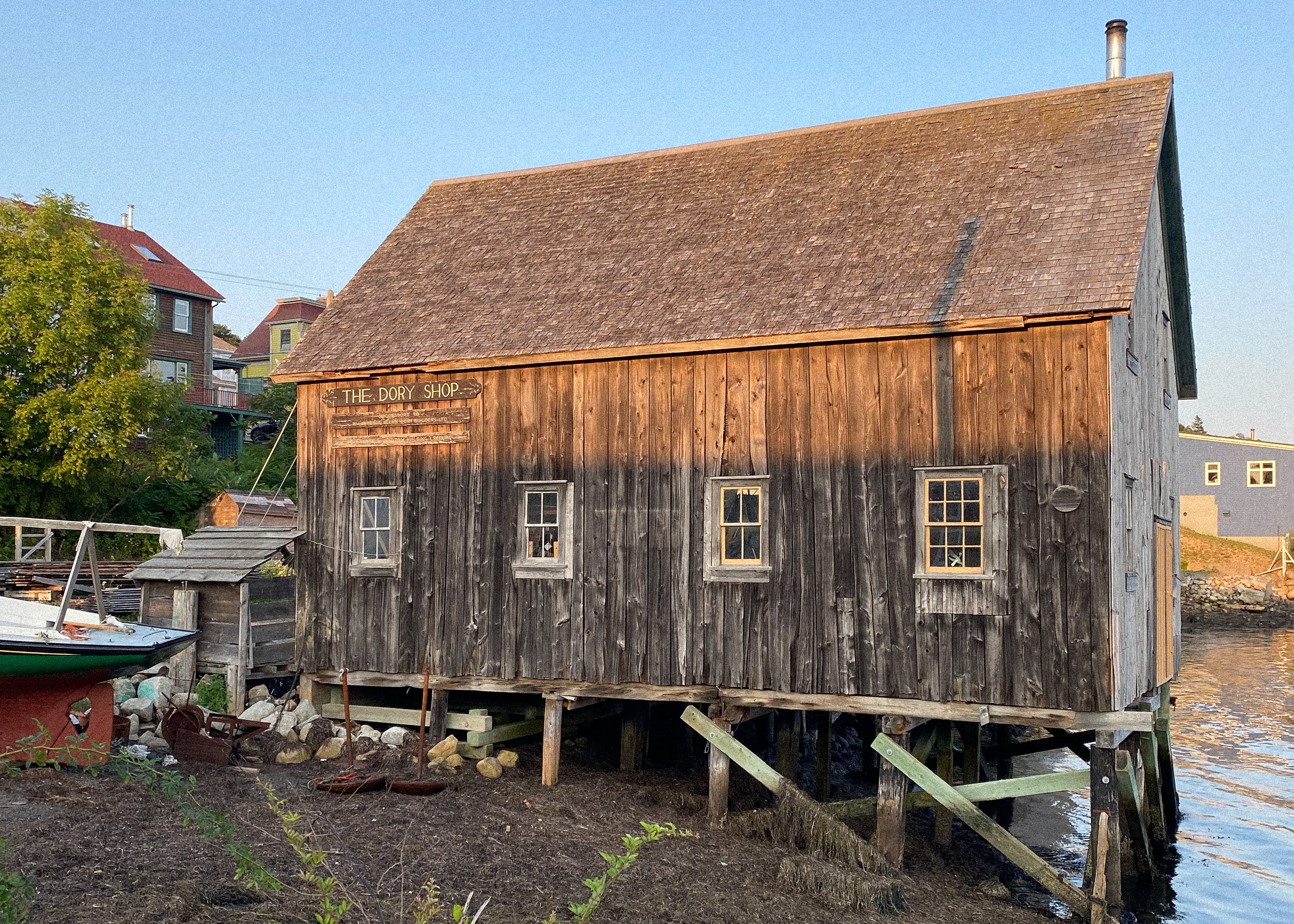
The Dory Shop of Lunenburg, Nova Scotia, was established in 1917 by Henry Rhuland.
At the time there were at least two other dory shops in Lunenburg: Arthur Oxner’s, which was just to the west of the modern-day Fisheries Museum of the Atlantic and another run by William Seaboyer, located just next door.
Mr. Rhuland set up his business at the other end of the muddy waterfront street that would eventually become Bluenose Drive in a harbourfront shed known locally as a fish store.
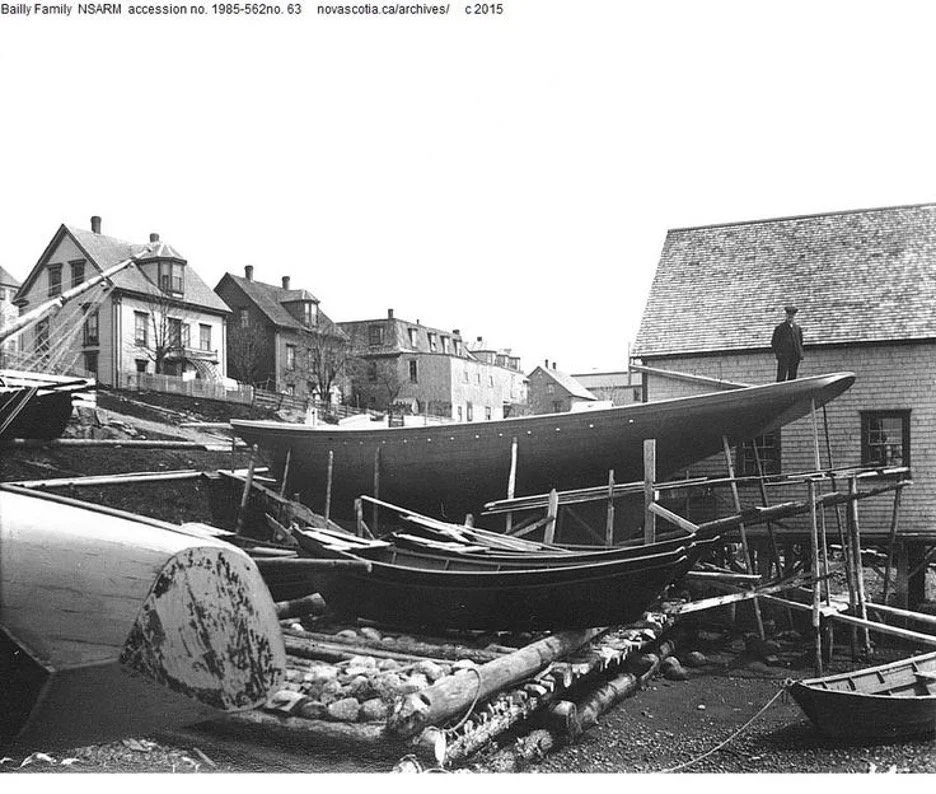
The Dory Shop, Lunenburg waterfront, Nova Scotia, 1905
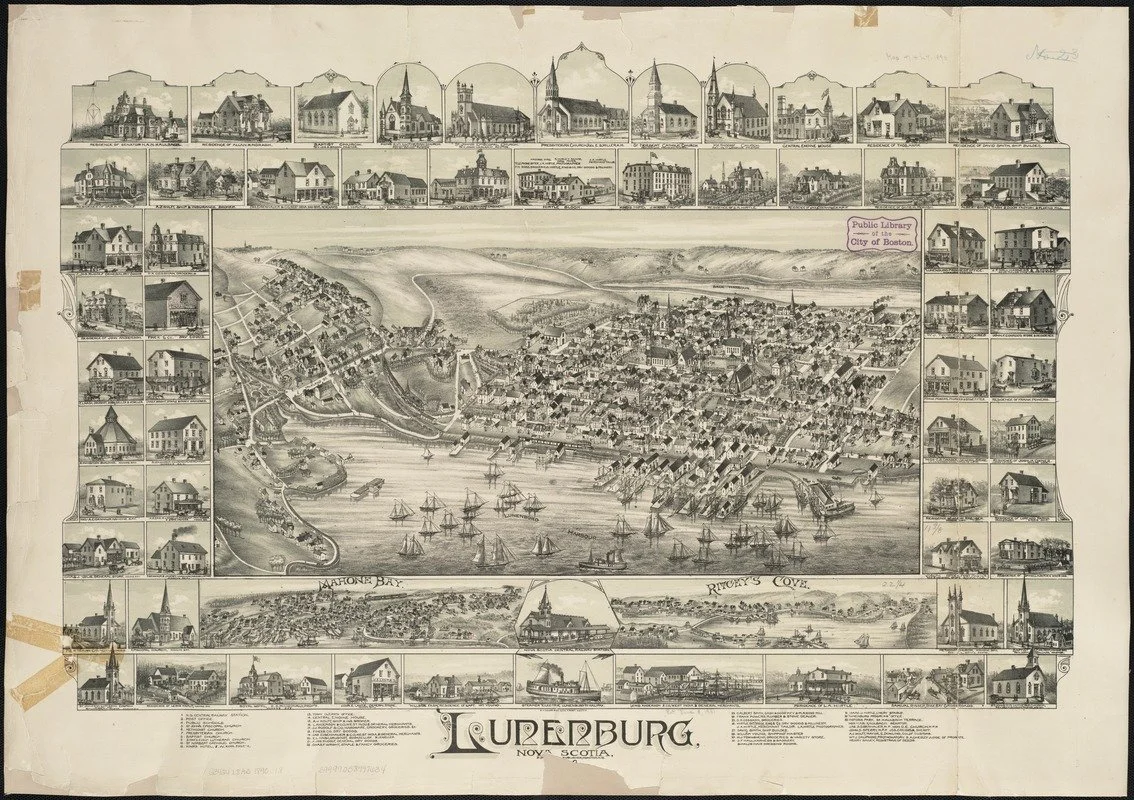
At the time there were dozens of these buildings, built just at the water’s edge to house gear and salt fish for drying. While the exact age of the building is not known, it is present on a bird’s eye map produced in 1890. Previous owners included William ‘Bubby’ Hirtle, Capt. Alex Knickle and Mahlon Rhodenizer.
When the dory business was slow, the men did vessel repairs. Key suppliers included Morris Bruhm’s mill in Upper Cornwall, now operated by his grandson Chris. It’s still where we get our planking and bottom stock.
The dory frames or knees were once supplied by Arthur Hatt of Beech Hill and then from his son Edgar and grandson Otho. Now, we make our own.
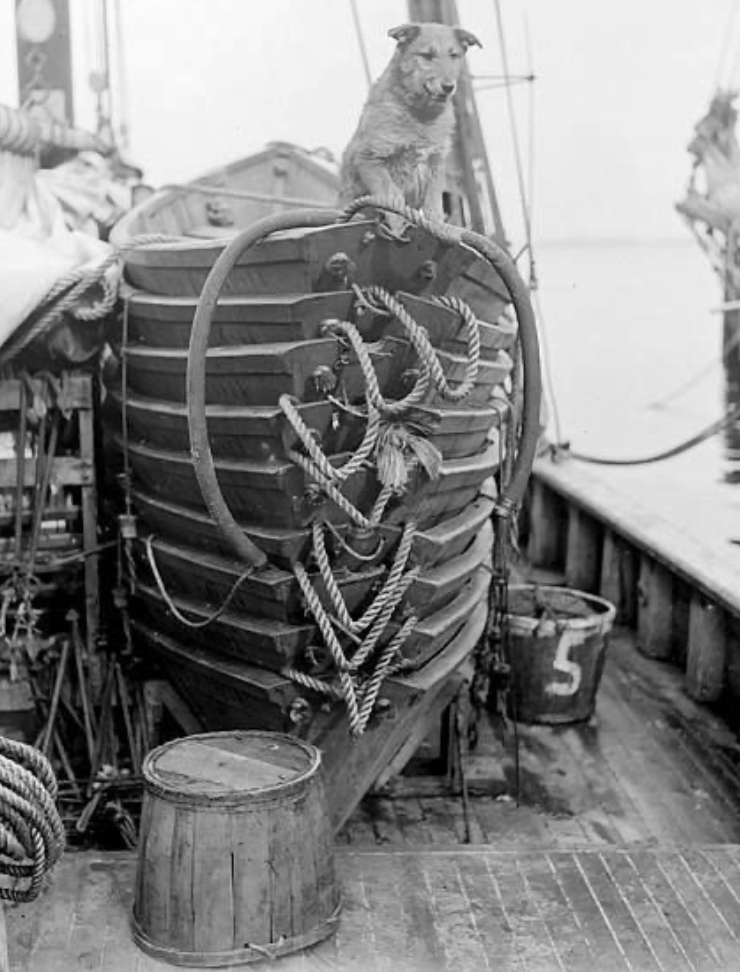
In 1949, Henry Rhuland sold the business to Lawrence Allen, a former Banks fisherman who ran it until illness forced him to sell in 1972. Subsequent owners included Robert Cram, Atlantic Shipbuilding, Kim Smith and the current owner, Dawson Moreland Ship Builders Associates Ltd., headed by Capt. Daniel Moreland.
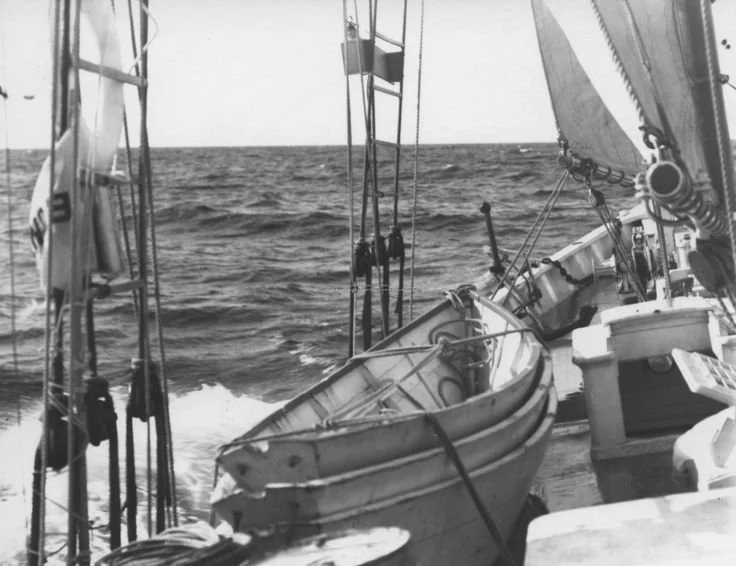
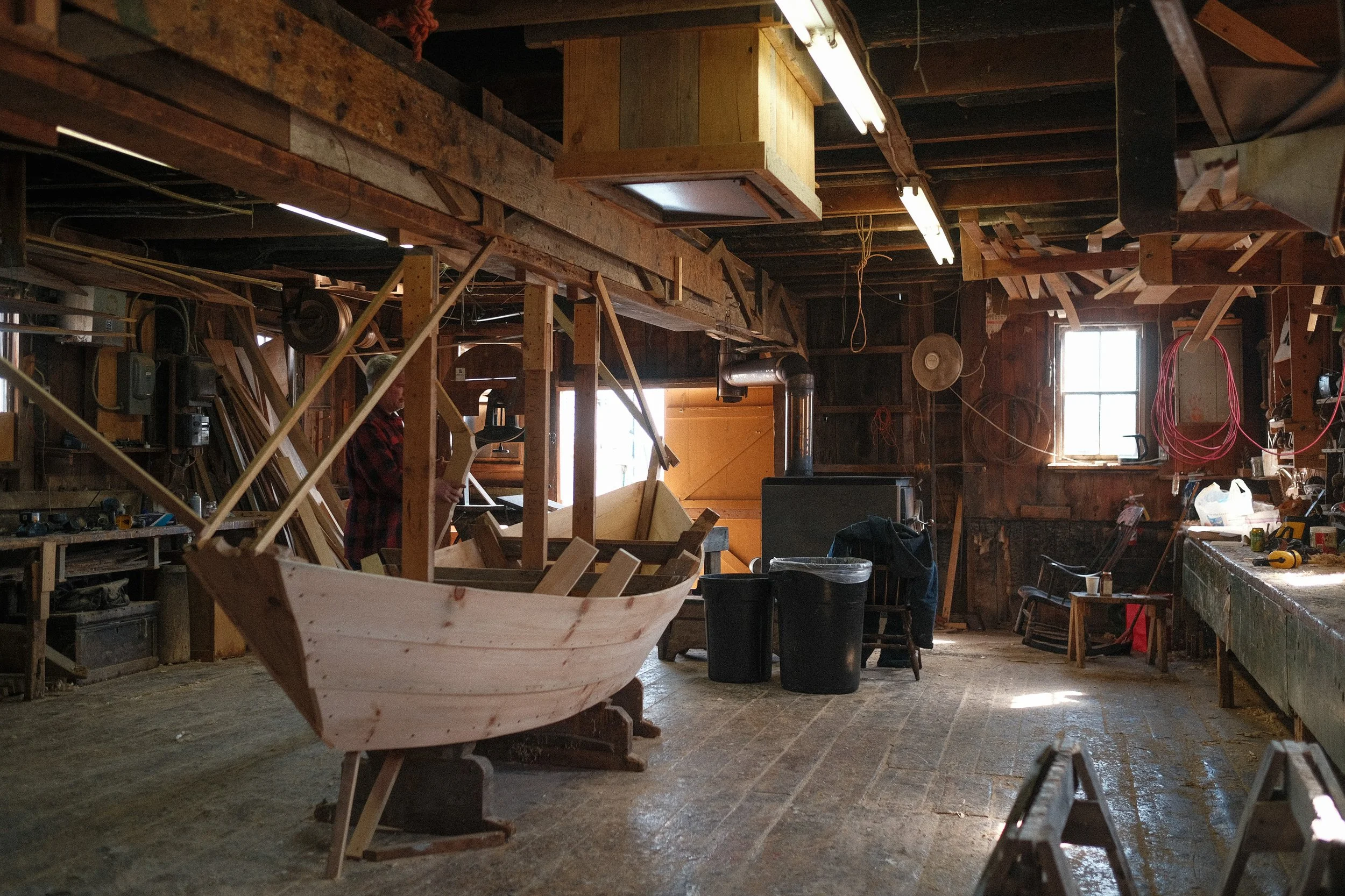
In peak years, the shop built up to 150 dories a year.
The dories were built production-style with individual employees working to produce specific components. For instance, one man built bottoms all the time, another cut stems and stern posts, others did planking and so on. A former employee, Freeman Rhuland, recalled that by the mid-1940s there were about 25 schooners still operating out of Lunenburg.
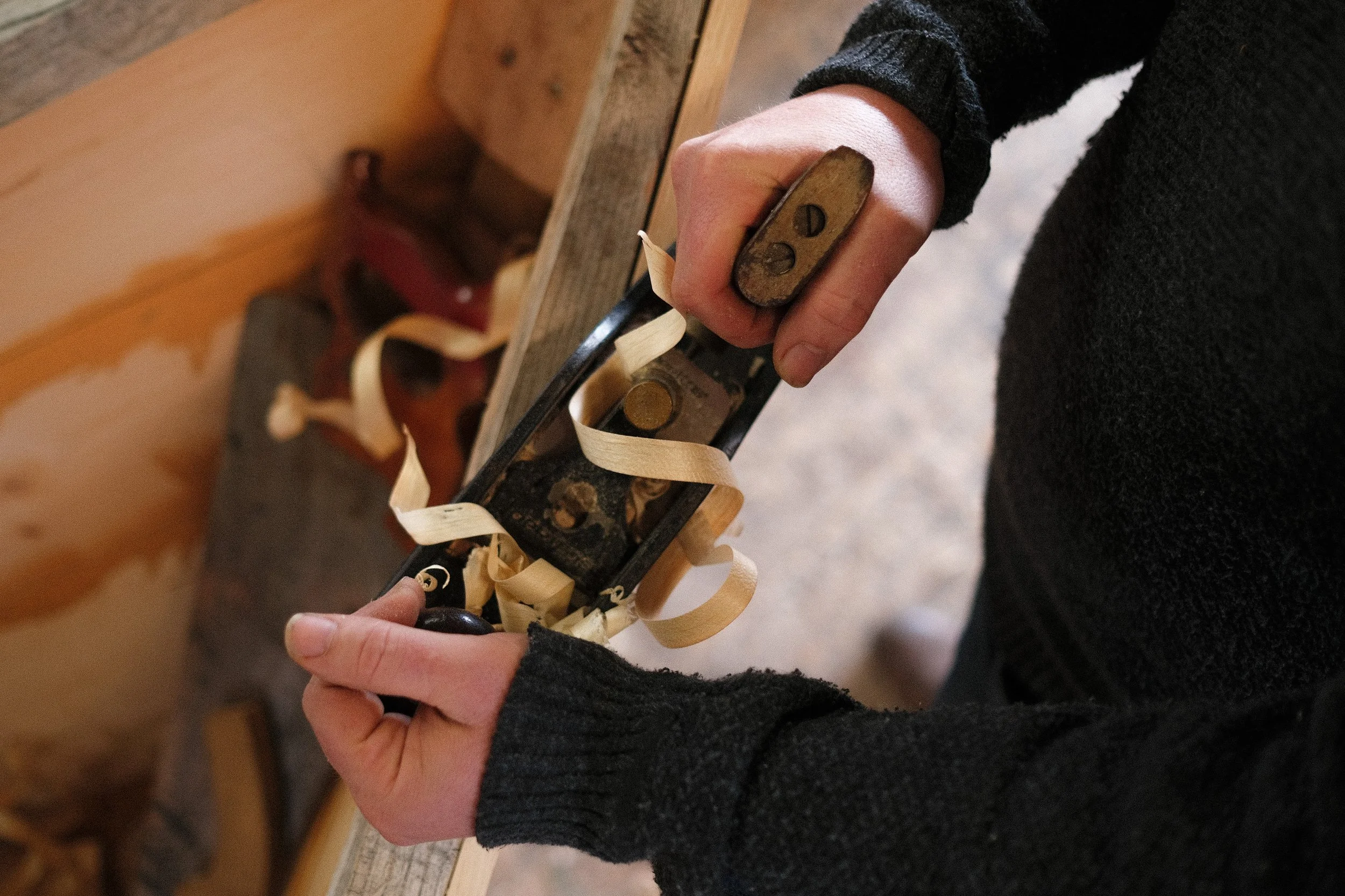
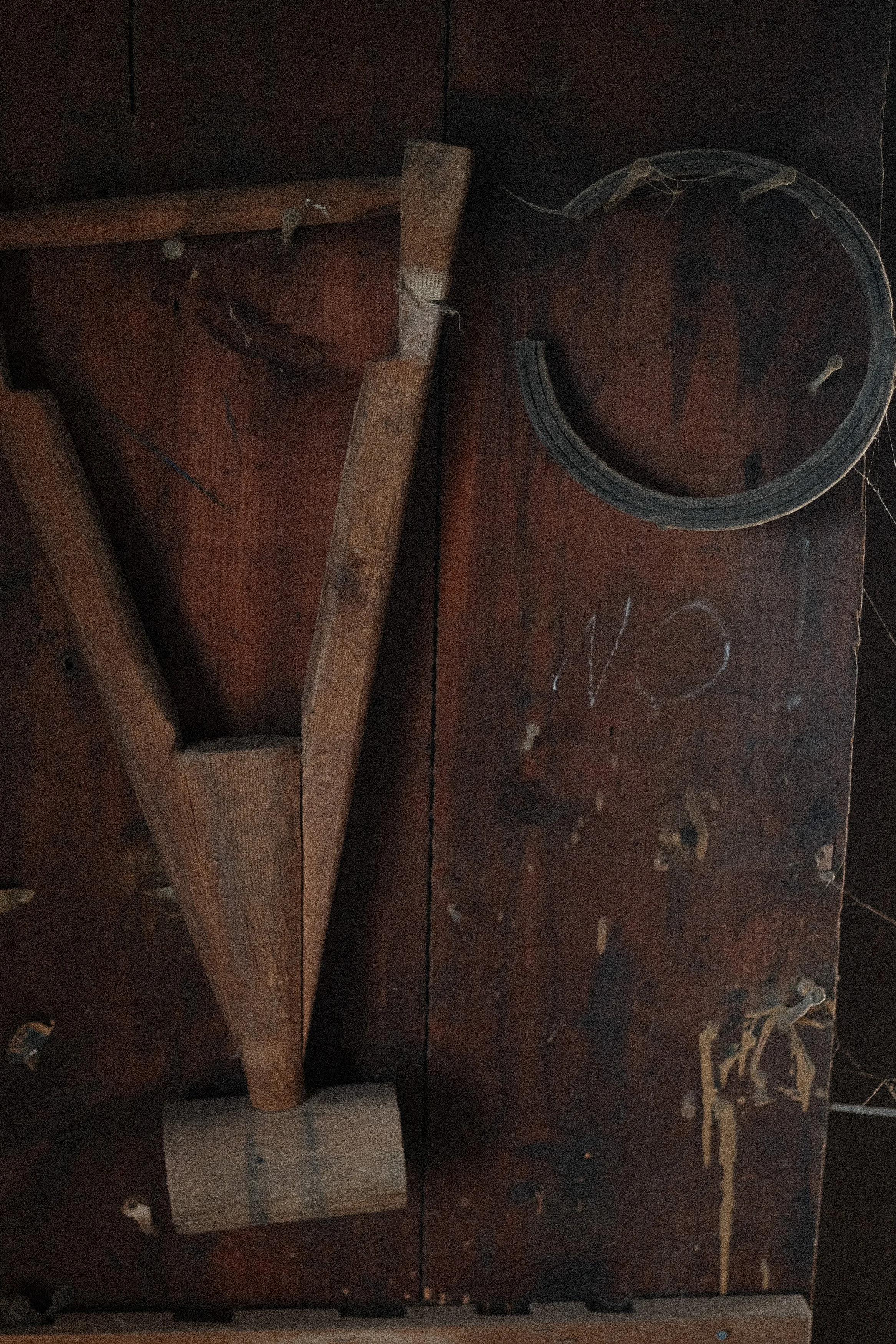
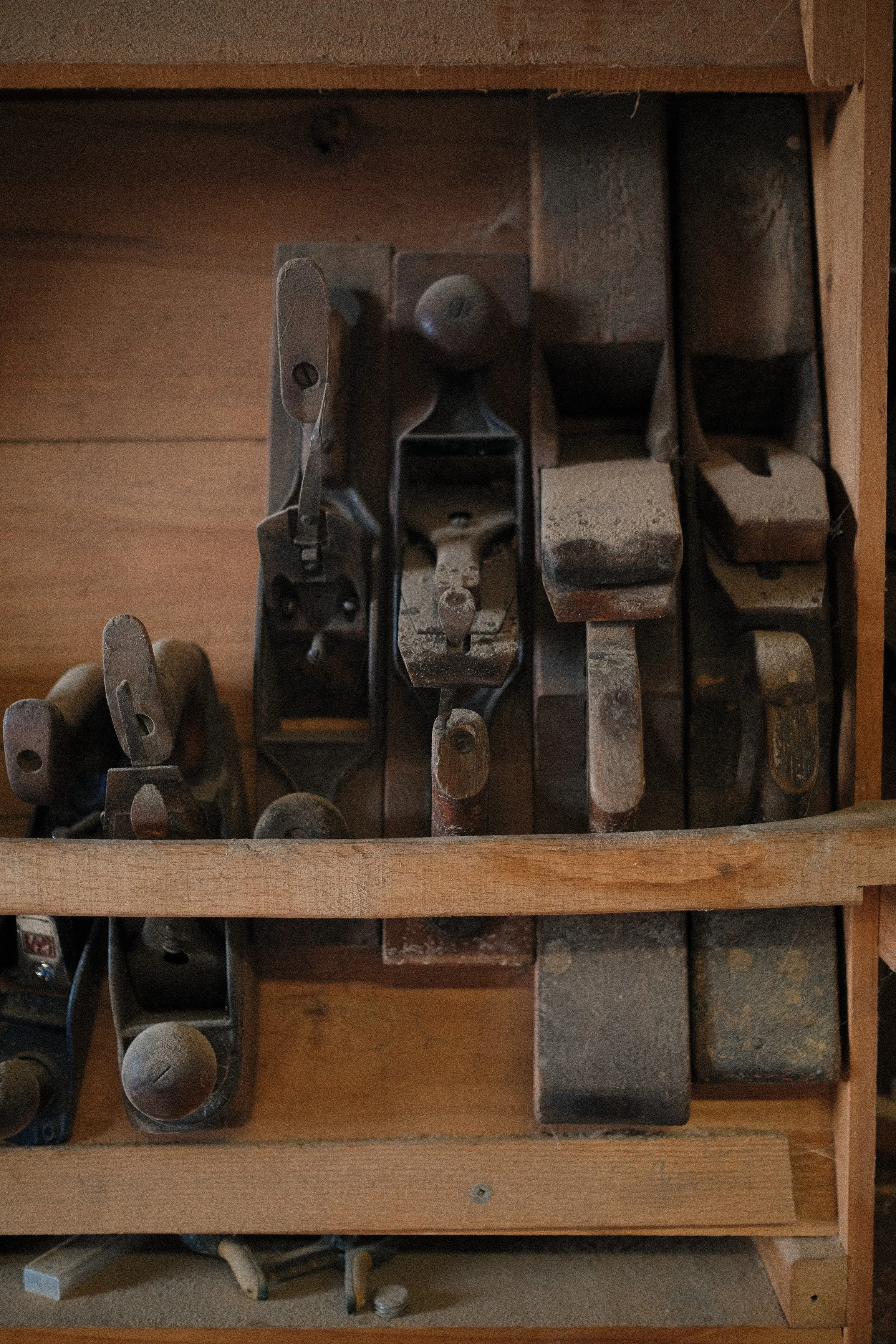
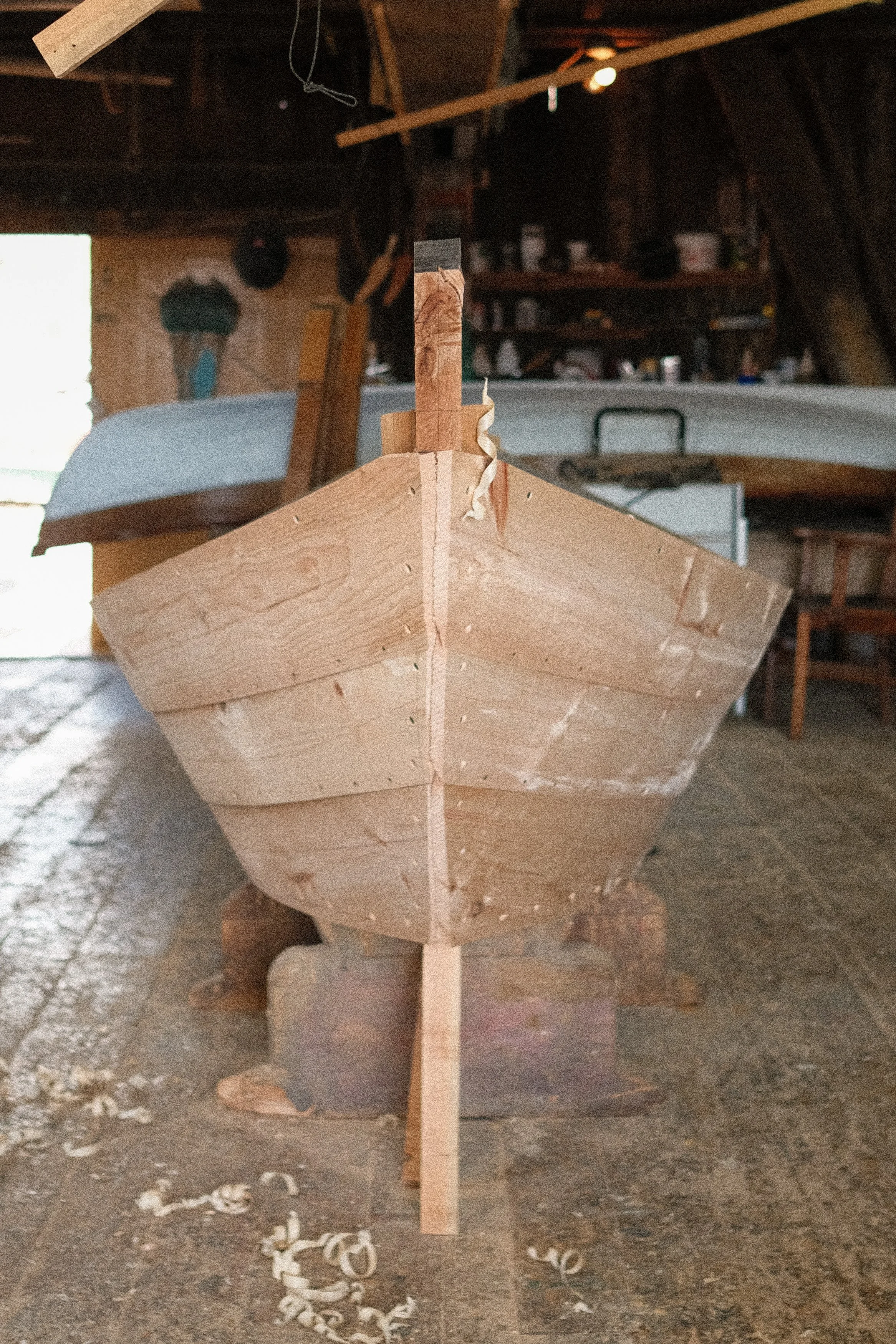
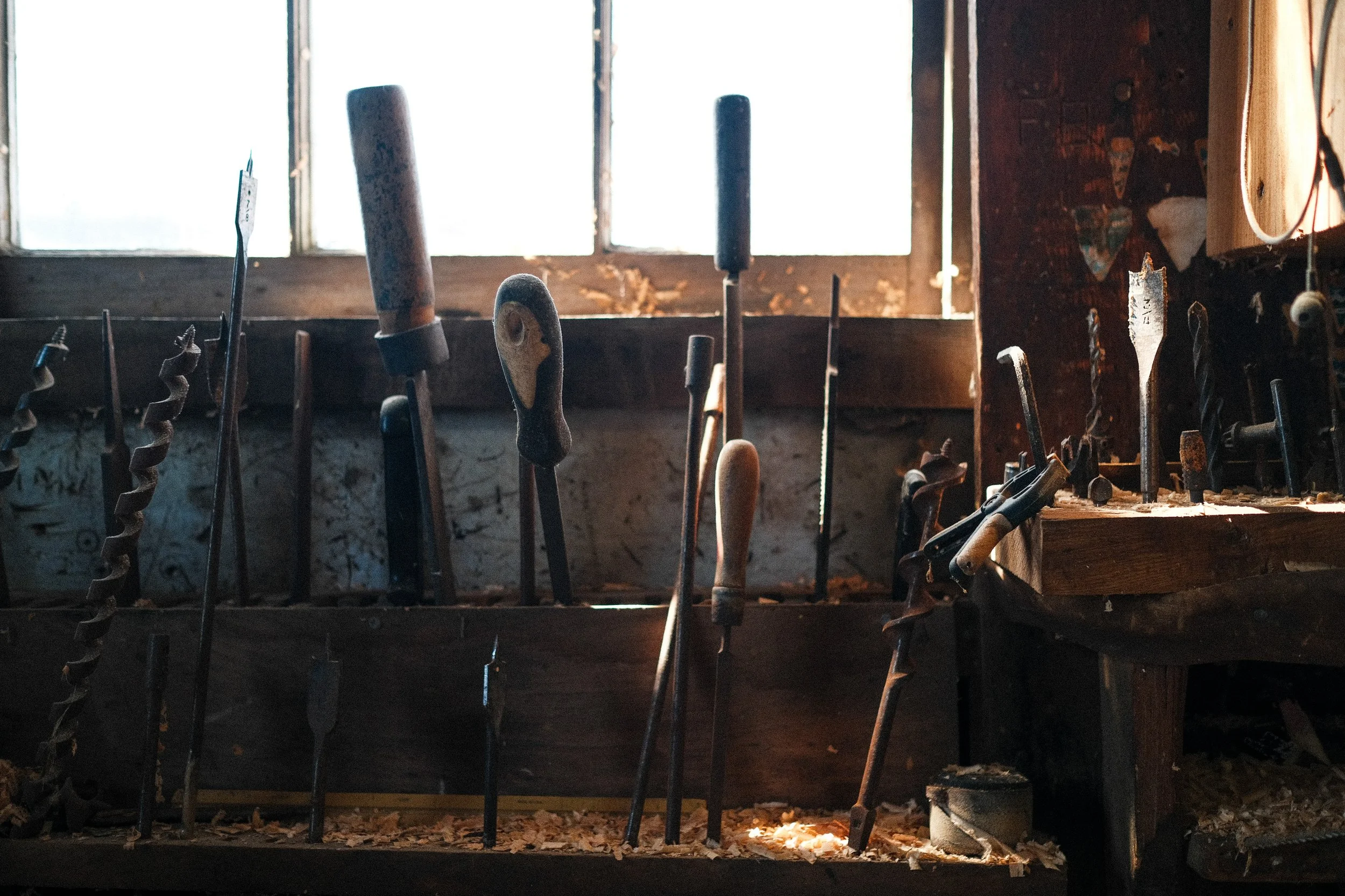
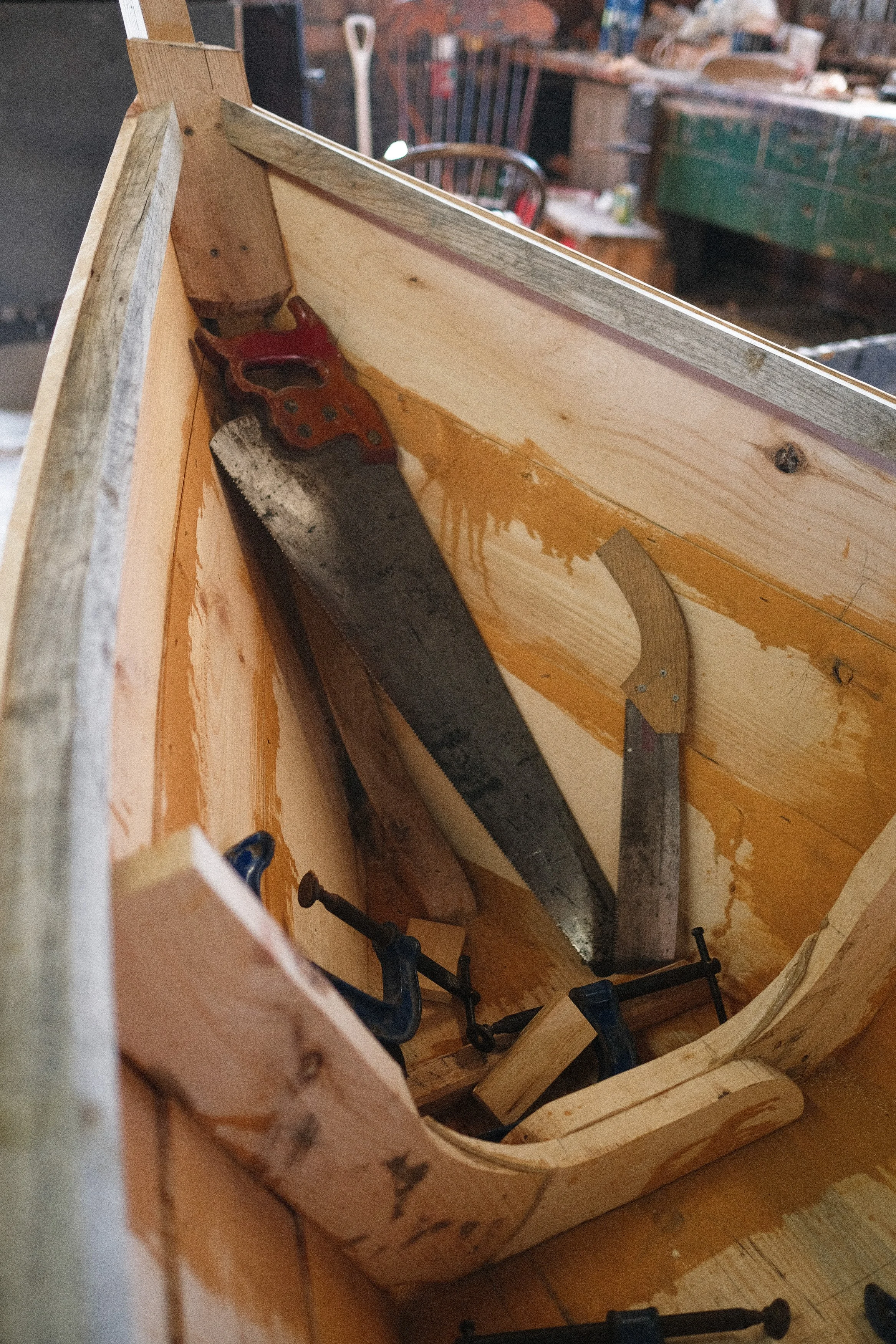
While the business changed hands, it never ceased production, making us one of, if not the oldest continuous production commercial boat building shop in North America. And while a few power tools have been added, we still use the same basic methods and materials, including dozens of wonderfully worn patterns, jigs and moulds that were used to build dories during the golden era of the Grand Banks fishery a century ago.
- Historian Ralph Getson, Lunenburg
Albert Krause recounts a lifetime of fishing in Lunenburg, detailing the history and craft of traditional dory boat building.
Experienced builders demonstrate the specific techniques and materials used to construct these vessels designed for treacherous waters. - Sherway Academy of Music
National Film Board of Canada
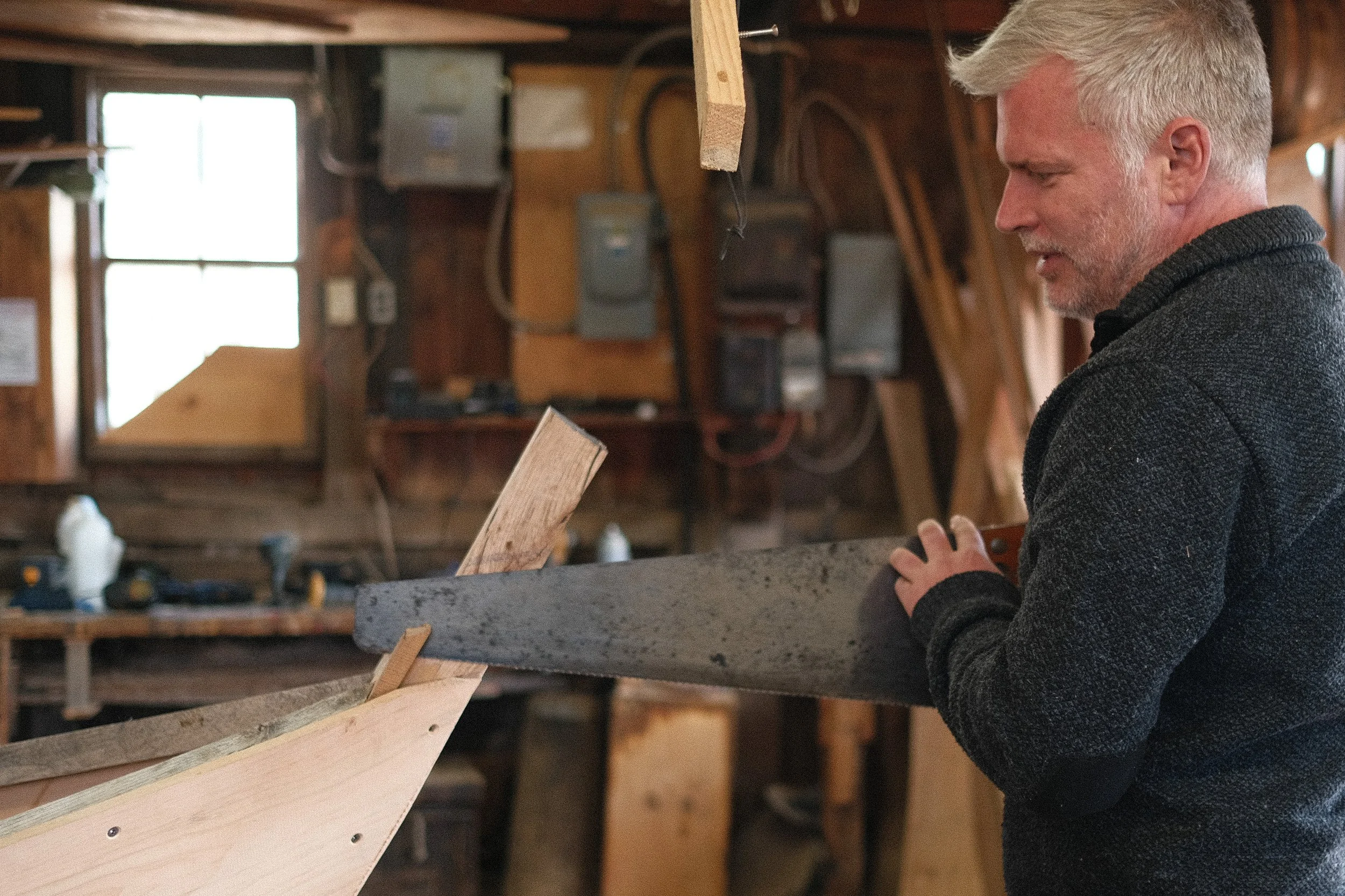
We’ve been building traditional dories the same way for over a century.